You know how it ends.They don’t.
Enter one documented hour. Ask anything the record can bear.
“No terms except an unconditional and immediate surrender.”VERIFIEDDispatch to S. B. Buckner, February 16, 1862 — The Papers of Ulysses S. Grant — one line the record can prove. Every quote in this room is graded the same way.
Or speak any name at all. The archive builds the dossier in front of you — era-locked to a fixed hour of their life, fenced at a knowledge horizon they cannot see past — or it tells you the record will not carry a voice, and why.
Documented words glow by how well they are documented. Touch one and the room names the instrument it came from. Everything unlit is the archive's own prose, and carries no grade at all — which is a sentence no other product in this category is able to write.
Three dispatches, and a war rearranges itself around them. At Donelson, to an old friend asking for terms, he wrote Two years later, to Meade, the whole of his strategy in eleven words: And from the Spotsylvania salient, with the army bleeding and Washington asking when he would turn back: The sentences between these are the archive's, not his. They carry no light, because they carry no grade.
ULYSSES S. GRANT · CERTIFIED SHELF · TOUCH A LIT PHRASE
- Dispatch to S. B. Buckner, February 16, 1862 — The Papers of Ulysses S. Grant
- Order to Gen. George G. Meade, April 9, 1864 — The Papers of Ulysses S. Grant
- Spotsylvania dispatch, May 11, 1864 — The Papers of Ulysses S. Grant
These exact words appear in the source named below. The room checked them against it. Matched, not endorsed. That the words are in the document is not a claim the document is true.
Attributed by another hand, after the fact. Nothing here was matched to a document.
This was claimed as documented and the claim did not check out. The words stay; the mark does not.
Generated dialogue informed by the record. Not quoted, and not claimed to be — which is most of what any figure says here.
Every certified dossier carries a list of the famous quotations its figure did not write. Ask a general-purpose model for one of these and you will very often get it back, in their voice, with confidence. Here they are struck.
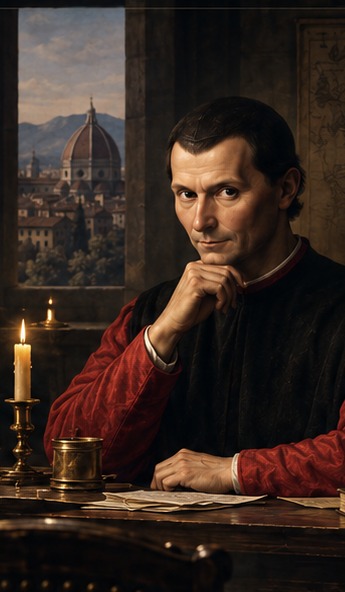
“The ends justify the means.”
The Prince, chapter 18, says people judge by outcomes — which is an observation about people, not a licence for you.
“Luck is what happens when preparation meets opportunity.”
Twentieth-century drift, attached to his name long after every surviving letter was written.
The whiskey-barrel quip about his generals.
Lincoln denied saying it. The story outlived the denial, as stories do.
The nearest thing to this product that ever went viral was killed inside two months because it would put words in any mouth you named, including mouths that should never be given a microphone. Refusal is not a missing feature here. It is the load-bearing wall.
Someone alive.
The archive will not embody a living person. It will assemble what the record shows of their documented views, and it will say that is what it is doing.
Someone the record cannot carry.
Where too little survives to hold a voice honestly, the archive declines and names what is missing — instead of writing a plausible person over the gap.
Someone whose crimes are the record.
There is a tier of the past this room will not give a microphone to. That refusal is not a limitation of the product. It is the product.
Every refusal is free, tonight and every night. Being told no does not cost a summon.
The letter.
Stay long enough and the figure asks to write to you properly. What arrives is period-voiced, reflects the conversation you actually had, and is yours to keep, print or post. Its grades travel with it: numbered marks keyed to a named provenance block, on the screen, in the exported image and on the printed page. A screenshot cannot strip the disclosure off it.
The voices.
Designed, never cloned — built from what the record says about how a person sounded, and labelled as an interpretation where nothing survives. Where there is no designed voice, the room stays silent and shows you the receipt instead. A synthetic reading of Seneca is not a lesser version of this product. It is a refutation of it.
Free, every night.
- One introductory Vigil of six exchanges, and one new name built from the record
- After it, two certified Vigils a month of eight exchanges each
- The named shelf and all three doorways
- Every refusal, always
- Your letters, kept on your own device
Patronage — $99 a year, or $12 a month
- twelve Vigils a month, eight exchanges each
- four new admissions a month — a figure the archive has not yet built, forged by name
- five thousand spoken characters of the designed period voices
- Letters sealed and addressed to you
- Renews at the price you paid until you cancel
The honest reason there is a limit at all: the room runs on a machine that is paid by the word, and every exchange inside a room is a fresh call to it. What the named shelf saves is the cost of BUILDING a mind, not the cost of talking to one — which is why a name the archive has already written up never spends an admission, and why the exchanges themselves are rationed.
Every voice here is an AI rendering of the documented record.
The figures are not the people. Nothing here is advice of any kind, and no living person is embodied.